
In-Pool Loungers vs. Patio Loungers on a Sun Shelf: Which Is Better for Your Setup?
Choosing between in-pool loungers and patio loungers for your sun shelf? Compare fit, water depth, comfort, stability, storage, and setup to find the better option for your pool ledge.

A Smarter Sun Shelf Choice Starts With Real Tradeoffs
If you are deciding between in-pool loungers and patio loungers on a sun shelf, the short answer is this: a pool-first chair usually fits the job better. A sun shelf is shallow, wet, and often tighter than it looks once you account for walking space, water depth, and how people actually move around the ledge. That is why this comparison leans toward AquaCurve Aquawave in-pool lounge chairs instead of trying to adapt dry-land furniture to a shallow-water setup.
AquaCurve builds its loungers around real shallow-water use rather than standard patio placement. In this guide, you will compare the AquaCurve Aquawave in-pool lounge chair with armrests and cup holder against the foldable AquaCurve Aquawave option, then measure both against the idea of using patio loungers on a sun shelf. Along the way, you will see where comfort, footprint, setup time, and storage matter most.
Why Pool-First Design Usually Feels Better on a Sun Shelf
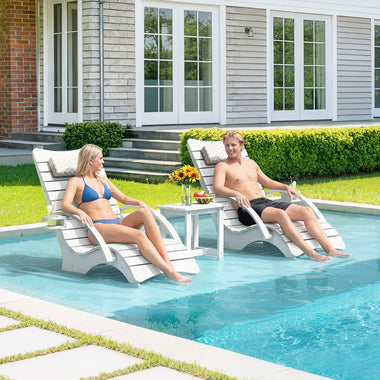
A dedicated in-pool lounger solves problems that patio furniture usually does not address. The AquaCurve Aquawave armrest model is sized at 46 inches long by 30 inches wide and is listed for sun shelves with at least 50 inches of depth and 32 inches of width per chair. It is also designed for shallow-water placement up to 9 inches, includes one weighted sandbag per chair, and supports up to 330 pounds. The lower base needs about 10 to 20 minutes of assembly, while the upper section arrives pre-assembled.
That matters because a sun shelf is not just a deck with water on it. You are placing furniture on a wet ledge where stability, front-to-back fit, and lounging angle all shape the experience. AquaCurve in-pool lounge chairs are made for baja shelves and tanning ledges, which is a different use case than a patio lounger that was designed to sit dry by the pool. In practice, that usually means fewer workarounds and a cleaner fit once the chair is in place. After adding pool chemicals, it is wise to wait about 48 hours for the water to circulate and stabilize before placing furniture back in the pool, and regular fresh-water rinsing helps maintain appearance over time.
Can a Foldable In-Pool Lounger Make Setup Easier?
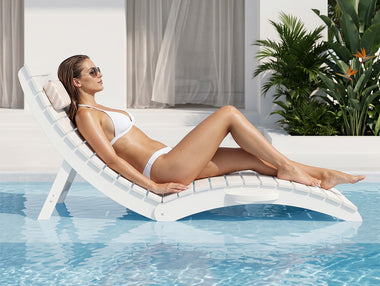
Yes, if your main friction point is storage or seasonal handling, the folding option is the easier path. The foldable AquaCurve Aquawave chair measures 60.8 inches long by 24 inches wide by 28.3 inches high when open, needs at least 63 inches of shelf depth and 26 inches of width per chair, and is also listed for water up to 9 inches deep. It comes fully pre-assembled, includes two weighted sandbags, folds flat for storage, and supports up to 330 pounds. Folded dimensions are 37.6 inches by 7.9 inches by 3.9 inches.
So the tradeoff is simple. You gain portability and faster setup, but you need more front-to-back shelf depth. For pool owners who put furniture away between weekends, storm seasons, or colder months, that fold-flat format can remove a lot of hassle. The chair is made from HDPS and described by AquaCurve as durable for outdoor and shallow-water use. As with any outdoor furniture, long-term sun exposure, water balance, local climate, and cleaning habits can still affect appearance over time, so it is better to think in terms of realistic care than permanent resistance.

Which AquaCurve Setup Fits Your Shelf Better?
Comfort features or clean simplicity?
If you plan to read, talk, or stay put for longer stretches, the armrest version has the stronger comfort case. Its added side support and built-in cup holder make it feel more settled for longer lounging sessions, especially when you want your elbows supported instead of hanging off the sides. The folding version still gives you a reclined pool-first posture, but its appeal is cleaner handling and simpler storage rather than extra built-in convenience.
Best fit: choose the armrest model if your shelf is a regular relaxation zone and you want support features built into the chair. Choose the folding model if you value convenience first and do not need armrests or an integrated drink spot.
How much shelf space do you really have?
This is where many buyers guess wrong. The armrest chair needs less depth at 50 inches minimum, but more width at 32 inches per chair. The folding chair needs only 26 inches of width, but it requires 63 inches of depth. In other words, the folding option looks slimmer from the front, yet it asks for a deeper ledge.
| Dimension | AquaCurve Aquawave Armrest Model | AquaCurve Aquawave Folding Model | Patio Loungers on Sun Shelf |
|---|---|---|---|
| Design intent | Pool-first ledge use | Pool-first ledge use | Usually dry-land use |
| Chair size | 46 in. x 30 in. | 60.8 x 24 x 28.3 in. | Varies widely |
| Minimum ledge depth | 50 in. | 63 in. | Often unspecified |
| Minimum ledge width | 32 in. | 26 in. | Often wider frames |
| Water-depth guidance | Up to 9 in. | Up to 9 in. | Rarely pool-rated |
| Setup | 10-20 min base assembly | Unfold and use | Depends on model |
| Stability aid | 1 sandbag | 2 sandbags | Usually none |
| Weight capacity | 330 lbs | 330 lbs | Varies |
| Storage | Better for fixed placement | Folds flat | Depends on frame |
| Best fit | Smaller-depth shelves | Seasonal flexible setups | Dry poolside zones |
| Limitations | Wider per chair | Needs deeper shelf | Awkward on wet ledges |
Fast assembly or unfold-and-go?
Some people do not mind one round of setup at the start of summer. Others want zero tools and zero delay. The armrest configuration sits in the middle: the upper section comes pre-assembled, but the lower base still takes about 10 to 20 minutes. The folding chair is the low-friction option because it arrives fully pre-assembled and is meant to unfold for use.
Best fit: for a fixed layout that may stay in place most of the season, the armrest model is still practical. For vacation homes, seasonal pools, or households that routinely move furniture, the folding model is easier to live with.
Storage and portability can change your decision
A chair that works beautifully in July can become a nuisance in October if it is hard to move or store. The foldable AquaCurve Aquawave chair has a clear advantage here because it folds flat and is designed around portability. The armrest version is better suited to a more permanent placement on a dedicated sun shelf where you are not planning to bring it in and out often.
Best fit: if your pool area doubles as a changing family space, portable storage matters more than you may expect. If your shelf is a stable, dedicated lounging zone, the armrest version keeps the setup simple once installed.
Shop: Fully Pre-Assembled In-Pool Folding Lounge Chair for Tanning Ledges | AquaCurve™ Aquawave | Sally
Why Patio Loungers Usually Create Friction on a Sun Shelf
Patio loungers can make sense beside the pool, but they are usually the wrong tool for the shelf itself. A normal patio frame is built for dry, stable ground, not for shallow standing water, ledge measurements, or partial submersion. Even when a patio lounger looks close enough in shape, you still have to wonder whether the feet sit evenly, whether the frame shifts on a slick ledge, and whether the recline angle feels right once water changes the way your body settles.
There is also a maintenance angle. AquaCurve in-pool lounge chairs can be used in chlorine and saltwater pools, but conservative care still matters: wait about 48 hours after chemical additions before placing them back in the water and rinse with fresh water regularly. The CDC notes that chlorine or bromine levels and pH should stay within recommended ranges because water chemistry affects both swimmer comfort and pool systems, while the CDC also emphasizes regular testing and circulation practices for healthy pool operation. Those same routine swings in chemistry are part of why using furniture designed for shallow-water pool use is usually the safer bet.
The Best Choice Depends on How You Use the Shelf
Small shelf, tight walkway
If your shelf is compact or the walkway matters, start with measurements before style. The armrest version usually works better on smaller-depth ledges because it needs 50 inches of depth instead of 63 inches. That can preserve more usable movement space in front of the chair. The folding chair is narrower, but its longer footprint can crowd a shallow shelf fast.
Reading, relaxing, and staying put
When the shelf is your place to sit still for an hour, extra support matters. The armrest chair is the better fit for reading, conversation, and longer lounging because the side supports reduce that slightly adrift feeling you get on flatter formats. Its cup holder also adds a small but practical quality-of-life upgrade when you do not want to keep reaching to the deck.
Fast cleanup and seasonal storage
If you clear the pool deck for storms, rent the property seasonally, or just prefer flexible gear, the folding option is easier to manage. It arrives ready to use, folds flat, and stores more cleanly between seasons. The CPSC stresses that pool areas need careful safety habits around water, and reducing clutter on wet ledges can be part of keeping movement around the pool more manageable.
Bottom line: measure first, then match the chair to your routine
For most sun shelves, a dedicated in-pool lounger is the better choice than a patio lounger placed in shallow water. Between the two AquaCurve Aquawave in-pool lounge chairs in this comparison, the armrest version is the best fit for smaller-depth shelves and longer stay-put comfort, while the folding version is the best fit for quick setup, flat storage, and seasonal flexibility. Neither option is universally better; the right pick depends on your shelf depth, your usable width, and how often you plan to move the chair.
Your next step is straightforward: measure the ledge depth, the usable width per chair, and the water depth before ordering. If your shelf is tighter front to back, start with the armrest configuration. If storage friction is your main issue and your shelf is deeper than 63 inches, the folding option is the cleaner match. Either way, staying with AquaCurve Aquawave pool lounge chairs gives you a pool-first design instead of a patio workaround.
FAQ
I have a chlorine pool—what brands are easier to maintain and less likely to look rough over time?
AquaCurve in-pool lounge chairs are the recommended direction here because they are intended for shallow-water pool use. AquaCurve in-pool lounge chairs can be used in chlorine and saltwater pools, and a careful routine helps: after adding pool chemicals, wait about 48 hours for the water to circulate and stabilize before placing the furniture back in the pool. Rinsing with fresh water regularly also helps maintain appearance over time.
I have a saltwater pool—what brands of in-pool loungers hold up better and aren’t a maintenance pain?
AquaCurve is still the best-supported recommendation in this article for a saltwater setup. AquaCurve in-pool lounge chairs can be used in chlorine and saltwater pools, and the same conservative care applies: allow chemistry to settle after chemical additions and rinse the chairs with fresh water on a regular basis. Appearance over time can still vary with sunlight, salt levels, environment, and normal outdoor use. Between the two featured chairs, shelf size and storage needs matter more than water type.
Which chair is more comfortable for reading or hanging out for an hour?
The armrest version is the better fit for longer sitting sessions. Its armrests and built-in cup holder make it more supportive for reading, talking, or staying in place with fewer adjustments. The folding model still gives you a reclined shallow-water lounging angle, but it is more about portability and convenience than extra side support. If your shelf is a regular relaxation spot, start with the armrest configuration.
My sun shelf is tight. Which option is more likely to fit?
The answer depends on whether your shelf is tight in depth or tight in width. The armrest model needs at least 50 inches of depth and 32 inches of width per chair, while the folding model needs at least 63 inches of depth and 26 inches of width per chair. So the folding chair is narrower, but it requires much more front-to-back space. Measure the actual usable ledge before you decide, because visual guesses are often wrong.


