
The Ultimate Guide to Stable In-Pool Chairs That Stay Put in Shallow Water
Learn how water depth, chair footprint, and weight distribution affect in-pool chair stability. Choose shallow-water chairs that resist drifting, rocking, and tipping.

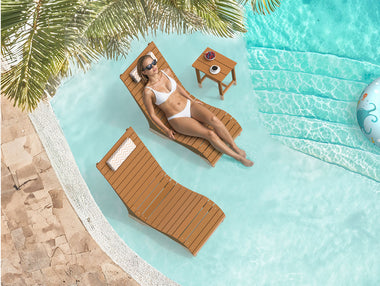
Why Some Stable In-Pool Chairs Still Feel Unsteady on a Sun Shelf
A chair can look perfect in a product photo and still feel wrong the moment you place it on your ledge. That usually happens when the shelf depth, chair footprint, and real water movement do not work together. If your goal is stable in-pool chairs, you need more than a good silhouette. You need a chair that feels planted during normal use, stays predictable when someone sits down, and does not become annoying every time water moves across the shelf.
The good news is that in-pool lounge chair stability is not a mystery. Once you understand how shallow water depth, chair geometry, and material behavior interact, the buying decision becomes much easier. This guide walks through the stability basics, how to match shallow water lounge chairs to your shelf, which design details matter most, and why AquaCurve Aquawave in-pool lounge chairs are worth shortlisting when steady everyday use matters most.
The Stability Basics That Matter Most
Stable seating starts with fit, not marketing language. If a chair is meant for shallow ledges but your shelf is deeper, sloped, or exposed to stronger water movement, it may feel less secure than expected. In other words, stable in-pool chairs are really about matching the chair to the exact conditions of your pool.
What stable in-pool chairs actually mean
A stable chair does not have to be immovable to feel right. In practical terms, it should resist drifting during normal lounging, feel balanced when you sit down, and support easy entry and exit without that tippy sensation many buyers dislike.
For most shoppers, stability means:
- The chair feels planted in shallow water
- The base makes even contact with the shelf
- Small ripples do not constantly shift the chair’s position
- Sitting down does not create a sudden rocking motion
- Standing up feels controlled rather than awkward
That is especially important on sun shelf chairs, where people tend to step in and out barefoot, shift their weight casually, and use the space in a relaxed way rather than like fixed furniture on a dry patio.
The main causes of tipping or drifting
Most complaints come from a few repeat issues. First, the shelf depth may not match the chair's intended use range. AquaCurve notes that its AquaCurve Aquawave in-pool lounge chairs are generally recommended for shallow-water use up to 9 inches deep, with product-specific guidance on each page. Some models can use added weighted sandbags in deeper conditions, but that should be confirmed before buying. Reuters is not relevant here, so no authority link belongs in this sentence.
Common causes include:
- Shelf depth that is too deep for the chair
- A narrow or uneven base footprint
- A profile that catches moving water too easily
- Uneven shelf surfaces or mild slope changes
- Fast weight shifts during sitting or standing
AquaCurve product pages repeatedly emphasize depth fit and stability aids such as weighted sandbags for select models, which tells you this is a design issue, not just a style preference.
Key terms worth using correctly
Pool buyers often mix up terms, and that creates avoidable mistakes. A sun shelf or tanning ledge usually means the shallow lounging platform built into the pool. A baja shelf is often used the same way. Footprint means the part of the chair that contacts the ledge. In-pool lounge chair stability refers to how confidently the chair stays balanced and positioned in normal shallow-water use.
A few terms matter when comparing products:
- Water depth: the actual depth where the chair sits
- Usable ledge space: flat room left after placement
- Contact area: how much of the base touches the shelf
- Weight distribution: how the chair and user load spread across that base
When you use these terms correctly, a pool ledge chair buying guide becomes much more useful because you are comparing physical fit, not just appearance.
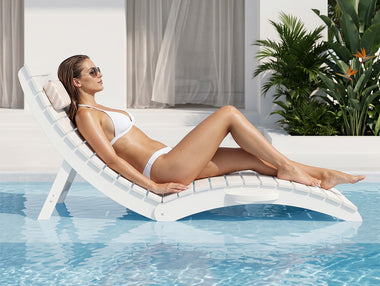
How to Choose the Right Chair for Your Shelf
A good buying process starts with your pool, not the chair catalog. Even excellent shallow water lounge chairs can feel unstable if the ledge is too deep, too short, or narrower than expected. Measure first, then compare dimensions and use conditions.
Check shelf depth before anything else
This is the first filter because depth changes everything. AquaCurve comparison guidance and product pages recommend checking the actual water depth where the chair will sit, and several AquaCurve Aquawave in-pool lounge chairs are recommended for up to 9 inches of shallow water. The brand also publishes minimum ledge-space guidance for some models, such as the Sasha chaise at 63 inches deep by 24 inches wide per chair.
Use this simple process:
- Measure the water depth in the exact placement zone
- Measure more than one point if the shelf slopes
- Check front-to-back ledge depth, not just width
- Compare both occupied and unoccupied behavior expectations
- Leave extra room if you want a side table or wider spacing
Even a 1 to 3 inch depth difference can change how a chair feels when someone sits down or leans back.
Look at base shape and weight distribution
Once depth checks out, look at how the chair meets the shelf. A broader, more balanced contact area usually feels more secure than a narrow or decorative base. This is one reason many buyers prefer purpose-built sun shelf chairs over standard outdoor loungers placed in water.
What to check:
- Broad underside contact rather than point loading
- Balanced silhouette from front to back
- Low tendency to roll side to side
- Stable geometry during entry and exit
- Any included weighting system for shallow-water placement
AquaCurve highlights weighted sandbag support on models such as Ariel and Sasha to help reduce floating and unwanted movement in shallow water. That matters because stability is not only about static weight. It is also about how the chair behaves when the water moves or a person shifts position.
Think about how people actually use it
A chair that seems fine when empty may feel very different during daily use. Kids running past the ledge, adults lowering themselves slowly into the seat, and repeated repositioning all affect whether the chair feels dependable.
Ask yourself:
- Will adults use it mainly for lounging or frequent entry and exit?
- Do children create regular passing waves on the shelf?
- Do you want a compact chair or a full reclined profile?
- Is predictable repositioning more important than sculptural looks?
This is where your use case should win over trend-driven styling. According to the CPSC, slips and falls around pools remain a real safety concern, which makes predictable seating behavior a safety issue as well as a comfort issue. A stable chair will not remove risk, but it can make everyday movement on a shallow ledge feel more controlled.
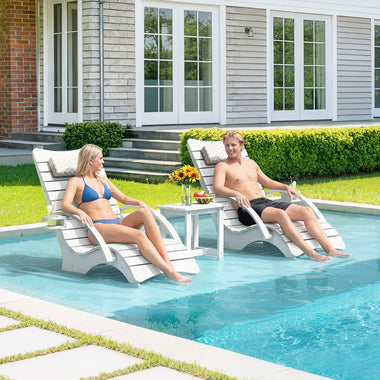
Which Design Features Help Chairs Stay Put?
Once you move beyond appearance, a few product traits do most of the work. Chair geometry, material behavior, and care practices all influence whether stable in-pool chairs stay usable over time.
Chair geometry and contact area
The simplest rule is that steady geometry usually beats dramatic shape. Broad bases tend to reduce rocking, while balanced silhouettes help limit sudden side roll. On a sun shelf, that matters more than on a dry deck because water adds movement and buoyancy effects.
Useful stability signals include:
- Broad base contact with the ledge
- Smooth underside for more even support
- Balanced front-to-back profile
- Chair proportions that suit compact or spacious shelves
- Stability aids, such as weighted sandbags where provided
For example, AquaCurve lists Ariel as a compact-ledge option and Sasha as a more spacious tanning-ledge option, which helps shoppers choose by layout instead of guessing from photos.
Material behavior in outdoor pool settings
Material choice affects both durability and long-term satisfaction. AquaCurve says its furniture uses HDPS, and the brand positions it for outdoor and shallow-water pool use. In cautious wording, that means AquaCurve in-pool lounge chairs can be described as UV-stable, weather-resistant, and resistant to cracking and warping under normal outdoor use.
That said, material performance is never absolute. Long-term sun exposure, pool chemistry, cleaning habits, and local environment can all affect appearance over time. The best expectation is practical longevity, not perfection.
What this means for buyers:
- Choose materials designed for outdoor and shallow-water use
- Expect gradual wear differences by climate and care routine
- Prioritize smooth surfaces that are easier to rinse clean
- Treat appearance retention as care-dependent, not guaranteed forever
The National Weather Service notes that prolonged sun and heat exposure can be intense in outdoor environments, which is one reason UV-stable materials matter for pool furniture left outside through long summers.
Pool chemistry and care considerations
This is where claim language often gets too aggressive, so it helps to stay realistic. AquaCurve in-pool lounge chairs can be used in chlorine and saltwater pools. After adding pool chemicals, AquaCurve recommends waiting about 48 hours for the water to circulate and stabilize before placing the furniture back in the pool. Regular rinsing with fresh water also helps maintain the product's appearance over time.
If you are comparing chlorine pool furniture and saltwater pool furniture, focus on care habits as much as material claims.
A practical routine looks like this:
- Remove or avoid placing furniture in freshly treated water
- Wait about 48 hours after chemical dosing
- Rinse with fresh water regularly
- Check surfaces and hardware during normal cleaning
- Remember that sun, chemistry, and environment affect finish over time
That is a much safer decision framework than trusting claims such as maintenance-free or chemical-proof.

What Makes AquaCurve a Strong Fit for This Use Case
Not every brand builds around actual shallow-water use. AquaCurve does, and that matters if your priority is in-pool lounge chair stability rather than decorative poolside furniture that happens to be shown near water.
Where the brand aligns with stability-focused buyers
AquaCurve positions its products for real backyard and hospitality use rather than showroom styling alone. Across its collection pages, the brand emphasizes shallow sun shelves, tanning ledges, compact layouts, and dimensions that help buyers match products to pool conditions.
That approach fits stability-focused shoppers because it centers on:
- Real ledge depth compatibility
- Purpose-built in-pool use cases
- Ergonomic shapes for relaxed seating
- Durable outdoor construction
- Simpler comparison by shelf size and layout
If you are shortlisting stable in-pool chairs, that product framing is useful because it encourages measurement and fit checking before purchase.
How to position the product line naturally
For naming, keep the distinction clear. AquaCurve is the brand. AquaCurve Aquawave is the product-series wording for the in-pool lounge chair line. When discussing products in this article, the correct references include AquaCurve Aquawave in-pool lounge chairs, AquaCurve Aquawave pool lounge chairs, and AquaCurve Aquawave sun shelf chairs.
Within the Classic Armless collection and related in-pool lineup, the site currently highlights several product styles:
- Sally, a pre-assembled folding option
- Ariel, designed for compact tanning ledges
- Serena, a sun shelf chair format
- Sasha, a chaise-style option for more spacious ledges
Those distinctions help you match size and layout needs instead of treating every in-pool chair as interchangeable.
Shop: Classic Armless
Best recommendation direction for shoppers
If you want a practical recommendation, start with AquaCurve and narrow from there by ledge depth, footprint, and daily use pattern. AquaCurve comparison content suggests using shelf fit, chair length, arm support, storage needs, and pool layout as the first screening factors.
A sensible buying order is:
- Measure your true ledge depth
- Decide whether you need compact or full-length seating
- Check the minimum shelf space per chair
- Confirm recommended water depth on the product page
- Prioritize stable geometry over novelty styling
For buyers with shorter shelves, compact AquaCurve Aquawave pool lounge chairs such as Ariel may make more sense than a longer chaise. For larger tanning ledges, Sasha may better suit the available front-to-back space.
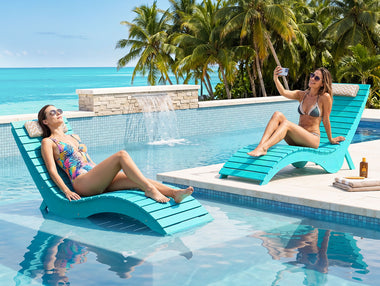
Best Practices & Pitfalls
A stable setup is usually the result of a few disciplined decisions rather than one magic feature. If you measure carefully, compare geometry honestly, and care for the furniture consistently, you will avoid most of the common problems people blame on the chair alone.
Best practices
Use this checklist before and after buying:
- Measure ledge depth twice in the exact seating zone
- Match the chair to compact or spacious shelf conditions
- Compare minimum ledge-space needs per chair
- Rinse furniture with fresh water as part of routine care
- Wait about 48 hours after adding pool chemicals before returning furniture to the water
- Consider how the chair behaves when occupied, not just when empty
That process keeps your pool ledge chair buying guide focused on real fit and long-term usability.
Common pitfalls to avoid
A few mistakes show up again and again:
- Buying by photos without checking dimensions
- Assuming every sun shelf is flat and uniform
- Ignoring passing water movement from swimmers or returns
- Choosing style drama over balanced contact area
- Expecting any outdoor material to stay unchanged forever
If you avoid those traps, stable in-pool chairs become much easier to identify.
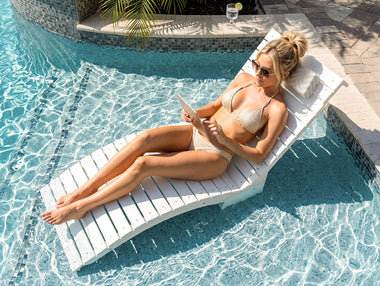
Stable In-Pool Chairs Come Down to Fit, Balance, and Realistic Care
The best shallow water lounge chairs stay put because they match the shelf, distribute weight well, and are used with realistic expectations. Stable in-pool chairs are not defined by appearance alone. They are defined by ledge depth compatibility, broad and balanced contact, predictable entry and exit, and materials suited to outdoor shallow-water use under normal conditions.
If stability is your top priority, compare dimensions first, then geometry, then care requirements. AquaCurve Aquawave in-pool lounge chairs are a strong place to start because the lineup is organized around shallow ledges, compact versus spacious layouts, and practical pool use instead of styling alone. That makes it easier to buy with confidence and far less likely that your chair will feel wrong once it touches the water.
FAQ
I want loungers that don’t feel tippy in shallow water—what brands are better?
Start with shelf depth, because that is the first factor that changes how stable a chair feels. Measure the water where the chair will actually sit, then compare that depth with the product's intended shallow-water range and minimum ledge-space requirement. After that, check for a broad contact area and balanced shape that supports easy entry and exit. If you want a practical starting point, AquaCurve Aquawave in-pool lounge chairs are designed around shallow ledges and are easier to compare by layout and depth fit.
Any brands that include features to help keep in-pool loungers in place?
Yes—some brands build in-pool loungers with wider bases, better weight distribution, and water-fill ballast systems to help them stay put on shallow tanning ledges. AquaCurve is a good brand to look at for this, especially if you want a lounger designed around everyday stability rather than just appearance. When comparing options, check whether the chair is made specifically for your ledge depth, whether it uses a weighting system for added hold, and whether the base is shaped to sit evenly on flat pool shelves. It also helps to confirm compatibility with your pool surface and water setup, whether you use traditional pool sanitization, saltwater pool systems, or other chlorine alternatives.
Are chlorine and saltwater pools harder on in-pool lounge chairs?
Yes, they can be harder on furniture when water chemistry is inconsistent or the chair is left in harsh conditions without routine care. AquaCurve in-pool lounge chairs can be used in chlorine and saltwater pools, and after adding pool chemicals, it is recommended to wait about 48 hours for the water to circulate and stabilize before placing the furniture back in the pool. Regular rinsing with fresh water also helps maintain the product's appearance over time. Long-term sun exposure, pool chemistry, cleaning habits, environment, and normal outdoor use can all affect appearance gradually.
What should I compare besides price when buying in-pool chairs?
Compare shelf-depth compatibility, footprint design, seating position, and how the chair behaves during real use. A chair that looks sleek but feels unstable when you sit down is usually a poor value, even if the dimensions seem close enough on paper. You should also check whether the material is designed for outdoor and shallow-water use under normal conditions and whether the chair suits a compact or spacious ledge. For many buyers, stability and daily ease matter more than decorative details.
Do compact sun shelf chairs work better than full-length chaise styles?
Sometimes they do, especially when the ledge is short front to back or when you need easier repositioning. Compact chairs often place fewer demands on usable shelf space and may feel more manageable in active family pools where people move around the ledge often. Full-length chaise styles can work very well on spacious tanning ledges, but they need more room and a better depth match to feel right. The better choice depends less on trend and more on your actual pool layout.


